

Artificial intelligence is everywhere – answering calls, scheduling appointments, and handling customer inquiries in seconds. So it’s no surprise that one question keeps coming up: Will AI replace human answering service agents?
The short answer is no. But the real answer is more interesting and more important for small businesses to understand.
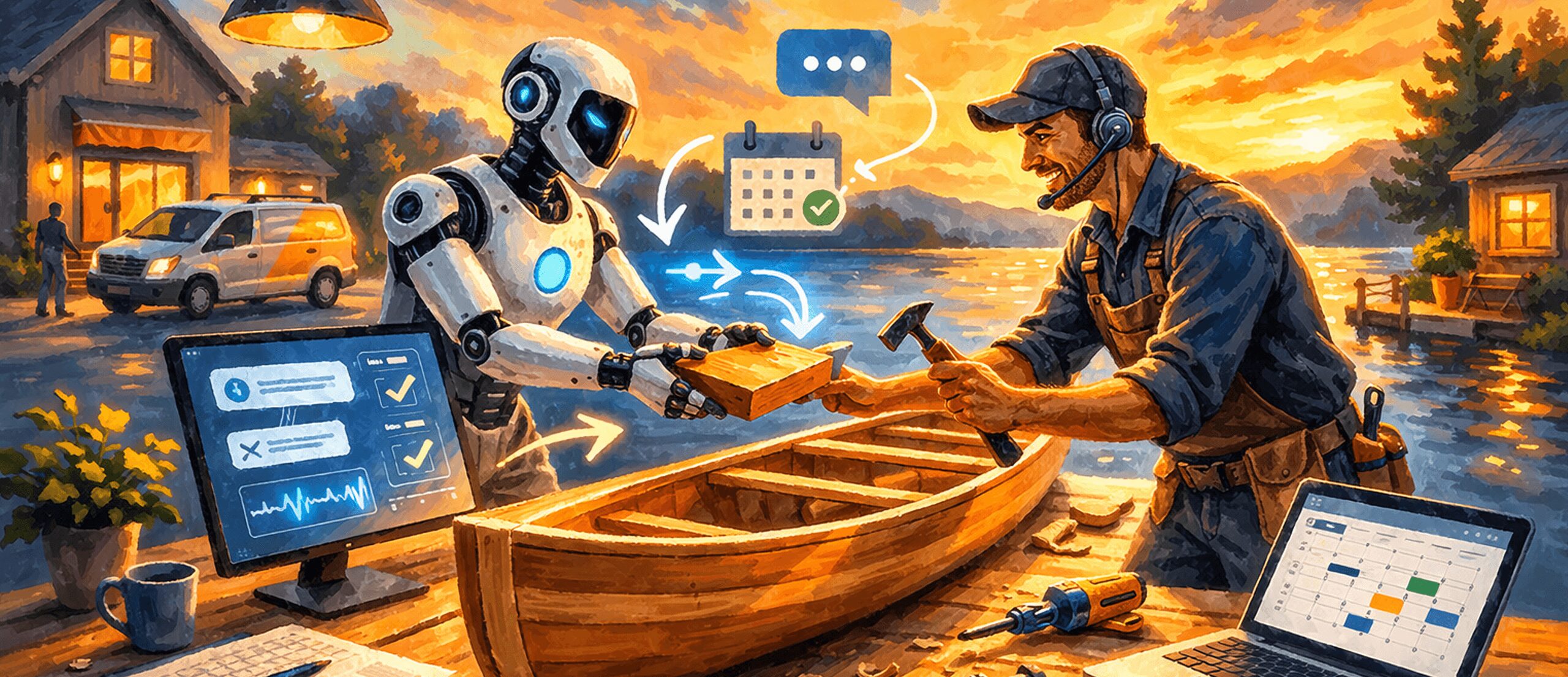
AI isn’t replacing human agents. It’s changing what they do, when they’re needed, and how efficiently calls are handled. In fact, the future of answering services isn’t AI or humans – it’s AI answering services, humans and AI working together.
Let’s break down exactly where AI excels, where humans still dominate, and what this means for small businesses that rely on answering services.
Why This Question Keeps Coming Up
There’s a reason this topic is everywhere right now. Advancements in AI, especially voice AI, have made it possible for systems to:
- Answer calls instantly
- Understand natural language
- Route or resolve simple requests
- Operate 24/7 without breaks
At the enterprise level, large call centers are already using AI to handle high volumes of repetitive interactions. This has led to headlines suggesting that human agents may become obsolete.
But here’s the problem: Most of those conversations are about call centers, not answering services. And that distinction matters more than most people realize when you’re discussing small to medium sized businesses – think your plumber, electrician, or doctor.
What AI Does Better Than Human Agents
There are certain types of calls where AI doesn’t just compete with humans, it often performs better.
1. Quick, Routine Interactions
AI thrives on structure and repetition. Some examples are:
- “What are your business hours?”
- “Can I schedule an appointment?”
- “What’s your address?”
- “Can you take a message?”
These interactions are predictable, short, and easy to standardize. AI can handle them faster and at scale, without errors or delays.
2. Call Routing and Intake
AI is highly effective at gathering information and routing calls appropriately. For example:
- Collecting caller name, phone number, and reason for calling
- Determining urgency (“Is this an emergency?”)
- Routing to the correct on-call technician or department
This reduces the workload on human agents and ensures calls get to the right place quickly.
3. After-Hours and Overflow Calls
One of AI’s biggest advantages is availability. AI can:
- Answer every call instantly, on the first ring
- Handle instant and unplanned spikes in volume, like power outages from storms
- Cover nights, weekends, and holidays
For businesses that can’t afford to miss calls, this is a major advantage.
4. Customers Who Prefer Speed Over Conversation
Some callers don’t want small talk, they want answers. AI is ideal for:
- Quick transactions
- Simple requests
- Callers who just want to “get in and get out”
And that group is growing.
Where Human Agents Still Win By a Mile
Despite AI’s strengths, there are areas where human agents are not just better, they’re essential.
1. Complex or Unpredictable Conversations
Real-world calls aren’t always clean and structured.
- A frustrated tenant reporting multiple issues
- A patient unsure if their symptoms are urgent
- A homeowner explaining a complicated plumbing problem
These situations require clarification, judgment, and adaptability. AI struggles when conversations go off-script. Humans don’t.
2. Emotional Intelligence and Trust
This is one of the biggest gaps. When someone calls:
- A medical office
- An HVAC company during an emergency
- A property manager with a complaint
They’re often stressed, frusturated, or have a very urgent need. Human agents can can show empathy, build trust, and adjust their tone to match the needs of the caller. AI can simulate empathy and change done, but it doesn’t truly understand the situation and there exists no real empathy. And callers can tell the difference.
3. Industry-Specific Decision Making
Answering services don’t just take messages, they represent businesses.
In industries like:
- HVAC
- Plumbing
- Medical
- Property management
Agents often need to prioritize emergencies, follow specific escalation rules, and interpret vague or incomplete information.
These decisions are nuanced and context-dependent. Humans handle that nuance far better than AI.
4. When Callers Want a Human
This is a critical and often overlooked point. Even if AI can handle a call, many callers still prefer a human!
Especially when:
- The issue is important
- The situation is unclear
- They want reassurance
In answering services, this preference is even stronger than in traditional call centers. If you call your doctor, you expect to speak with a human. If you’re calling your cable company, you likely expect some type of AI (or IVR) will initially take your call.
The Key Difference: Call Centers vs Answering Services
Most articles about AI replacing agents focus on enterprise call centers. But answering services operate very differently.
Enterprise Call Centers:
- High volume
- Highly scripted
- Repetitive interactions
- Easier to automate
Answering Services (SMB-Focused):
- Unpredictable call types
- Industry-specific workflows
- Higher variability in conversations
- Greater need for judgment
This is why AI adoption is faster in call centers than in answering services. And it’s why human agents remain critical in the answering service model. Unlike enterprise call centers, an answering service built for various industries must handle more unpredictable and nuanced conversations.
What Callers Actually Want
The future isn’t just about technology, it’s about preference.
Today’s callers fall into two groups:
1. AI-Friendly Callers
- Want speed
- Prefer automation
- Comfortable with AI
2. Human-Preferred Callers
- Want reassurance
- Need help thinking through a problem
- Prefer speaking to a real person
The key is not choosing one over the other. It’s giving callers the option.
The Real Future: AI + Human Collaboration
The most successful small businesses are using AI answering services that adopt a hybrid model. The future isn’t AI or humans – it’s AI + live agent answering working together to deliver better outcomes.
AI Handles:
- First-touch interactions
- Call intake and data collection
- FAQs and simple requests
- After-hours coverage
- High-volume overflow
Humans Handle:
- Complex conversations
- Emotional or sensitive situations
- Escalations
- Industry-specific decision making
Instead of replacing humans, AI acts as a filter and accelerator. It ensures that:
- Simple calls are handled instantly
- Human agents focus on high-value interactions
Real-World Call Examples
Here’s how a hybrid AI answering service model plays out in practice where the future isn’t replacement, but division of labor:
| Call Type | Best Fit | Why |
|---|---|---|
| Appointment scheduling | AI | Structured and predictable |
| Business hours inquiry | AI | Simple, fast response |
| After-hours message | AI | No urgency or complexity |
| HVAC emergency (no heat) | Human | Urgency + decision making |
| Medical concern | Human | Sensitivity + liability |
| Billing dispute | Human | Emotion + nuance |
| Property maintenance issue | Hybrid | AI intake → human follow-up |
So... Will AI Replace Human Answering Service Agents?
No. AI will not replace human answering service agents, but it will reshape their role.
It will:
- Handle routine and repetitive calls
- Improve speed and availability
- Reduce workload on human agents
But humans will remain essential for:
- Complex conversations
- Emotional intelligence
- Industry-specific decision making
- Building trust with callers
The idea that AI will completely replace human agents makes for a good headline, but it doesn’t reflect reality. What’s actually happening is more powerful:
AI is making answering services faster, smarter, and more efficient—while making human agents more valuable than ever.
The small businesses that win won’t be the ones that choose AI over humans. They’ll be the ones that strategically use both.

